I. The boy with the book
I was born in Belfast, and for nine years I grew up with bombs and soldiers in the streets. War was not an idea to me. It was the neighborhood.
My father read me Churchill's history of the Second World War — Churchill telling it in his own voice. I was eight. I learned the Battle of Britain stories by heart: the small nation that stood when standing looked hopeless.
At nine, newly arrived in America, I gave my first big presentation to my new classmates. The subject was Churchill and the Battle of Britain — an immigrant kid teaching his new country about a war for national survival.
Thirty-five years later, in a living room outside San Francisco, I realized I was still giving that talk.
II. The soldier
West Point, class of 2000. A history degree in a school of engineers — my thesis on how the Spanish Civil War led to the Second World War.
Then Iraq, twice. On the first tour I was Regimental Adjutant to H.R. McMaster at Tal Afar, watching a great commander run the first successful counterinsurgency of that war from the middle of an ancient citadel. On the second, I commanded a cavalry troop of 140 soldiers through the Surge.
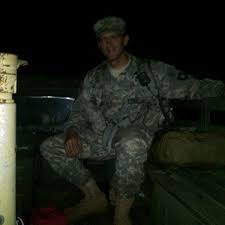
One morning in January 2008, in a village called Sharqat, I stood watching my soldiers stacked against a wall outside a house that held the enemy. My heart dropped. They were exposed, and they were going in anyway — because sixteen months of training had made it second nature, and because they would rather die than let each other down.
That morning installed the only professional standard I have ever needed: war is human, and everything built for war must serve the humans at the front.
Two days later, the enemy sent a truck rigged to explode to our base. The local police we fought beside — and lived among — stopped it. Embeddedness is not a strategy. It is survival.
The Army then sent me to study Russian history and teach it at West Point. I left the classroom in 2013 — the year the Revolution of Dignity began in Ukraine.
III. The return
I moved to Kyiv in 2018 to build a startup. On February 12, 2022, I flew out with the last of my team — the ones who listened — looking down at the city and believing I would never see my home again.
Then the war began, and everyone left. My whole company. Every expat friend from four years of life there.
I came back. Broke, in debt, with no plan except the certainty that this was the pure fight of our lifetimes — good against evil, undisguised. I turned a camera on and broadcast from Kyiv through the battle, nearly every night. Our small foundation helped move more than three hundred people to safety.
And then I found the work I had been trained for my whole life without knowing it: standing between the builders of the West and the defenders of Ukraine, making each real to the other.
Since 2022, the Borderlands Group has taken more than fifteen defense companies into Ukraine. I have brought generals to the front and founders to the generals. I teach the history of this war on the Ukraine Military History podcast, and I gave the private San Francisco talk that became Ukraine for Founders.
I live in Kyiv with my wife and our daughter, who is ten months old. When the explosions are close, I ask myself the question every parent here asks. Then I remember the men holding the line east of us, and I get back to work.
The 2022 broadcasts still exist — recorded the week of the Battle of Kyiv. We are restoring a few of them, unedited.